
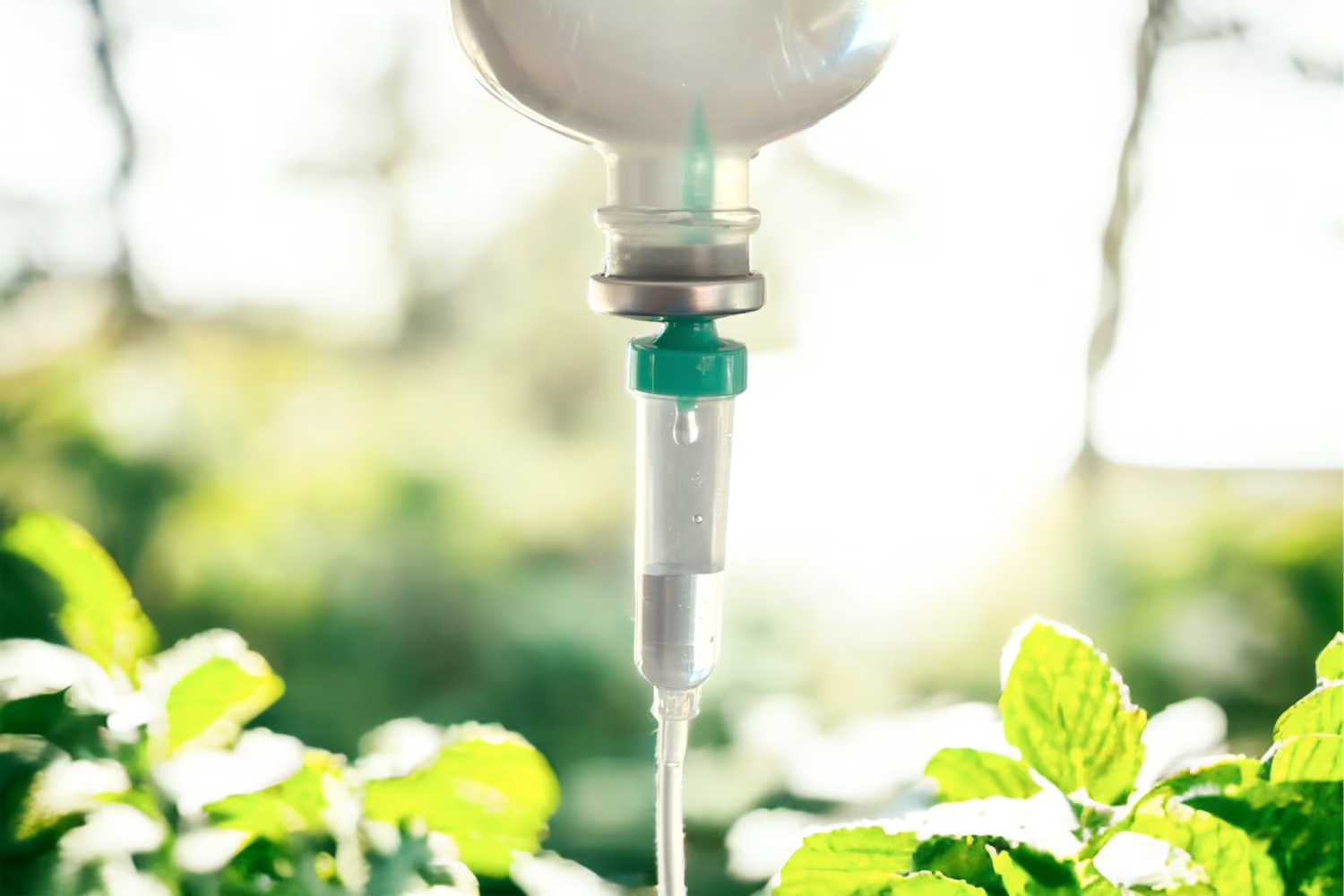
IV Therapy in New Jersey
When you're looking into IV therapy, you may be looking for something specific: support after a demanding period, help addressing a nutritional deficiency, or a convenient way to receive fluids and certain nutrients.
IV therapy delivers fluids, vitamins, minerals, or other medications directly into a vein. What belongs in an IV depends on the patient's medical needs and the specific treatment being provided.
At Healthy Aging Medical Centers of New Jersey, IV therapy is approached as a medical service rather than a one-size-fits-all wellness treatment. Your health history, symptoms, medications, and treatment goals help determine whether an IV treatment is appropriate.
What Is IV Therapy?
Intravenous, or IV, therapy uses a small catheter placed into a vein to deliver fluids or medications directly into the bloodstream.
Depending on the treatment, an IV may contain:
- Fluids for hydration
- Specific vitamins
- Electrolytes
- Minerals
- Medications
- Other medically appropriate ingredients
The contents of an IV should be selected based on the purpose of treatment rather than assuming that every patient needs the same combination.


Why Do People Consider IV Therapy?
People may ask about IV therapy for different reasons. For some, the primary concern is hydration. Others may be interested in receiving specific nutrients or medications through an intravenous route.
IV treatment may be considered in situations involving:
- Dehydration
- Certain nutritional deficiencies
- Situations where oral intake or absorption is a concern
- Specific medical or wellness goals identified during an evaluation
However, an IV isn't automatically more beneficial than taking something by mouth. The appropriate route depends on what is being treated and why.
Is IV Therapy Right for You?
Before recommending an IV treatment, your provider may consider:
- Your current symptoms
- Medical history
- Medications and supplements
- Hydration status
- Nutritional concerns
- Kidney and heart health
- Allergies
- Previous reactions to medications or infusions
- The specific reason you're seeking treatment
This helps determine whether IV therapy is appropriate or whether another treatment would make more sense.


What Happens During an IV Therapy Appointment?
Your provider will first review the treatment being considered and your relevant health information.
If IV therapy is appropriate, a healthcare professional places a small catheter into a vein, commonly in the arm or hand. The selected fluid or treatment is then administered over a period of time.
You may be able to relax, read, or work quietly during the infusion, depending on the treatment and the clinic's recommendations. The length of an appointment varies according to what is being administered.
IV Therapy for Hydration
Fluids can be administered intravenously when a patient needs hydration and oral fluids aren't sufficient or aren't appropriate for the situation.
It's important to distinguish medically indicated IV hydration from the idea that everyone needs routine IV fluids. For healthy people who can drink normally, adequate oral hydration is generally the simplest way to maintain fluid balance.
If you're experiencing significant dehydration, persistent vomiting, confusion, fainting, or other concerning symptoms, you may need urgent medical evaluation rather than a routine wellness IV.


IV Vitamins and Nutrients
Some IV treatments contain vitamins, minerals, or other nutrients.
The appropriate ingredients depend on the treatment being provided. If you have a suspected deficiency, your provider may consider your symptoms, dietary intake, medical history, and laboratory findings before recommending supplementation.
Receiving a nutrient intravenously doesn't automatically mean your body needs more of it. More is not always better, and some nutrients can cause harm at excessive levels.
IV Therapy vs. Oral Supplements
One common question is whether IV therapy is “better” than taking vitamins or fluids by mouth.
There isn't one answer for every situation. Oral supplements are appropriate for many people. IV administration may be considered when there is a specific medical reason to use the intravenous route.
Your provider can explain why a particular treatment is being offered and whether oral supplementation could meet the same need.


What Should You Tell Your Provider Before IV Treatment?
Make sure your medical team knows about your prescription medications, over-the-counter medications, vitamins and supplements, kidney disease, heart conditions, high or low blood pressure, pregnancy or breastfeeding, medication allergies, and any previous reactions to IV treatments. Your medical history can affect which fluids, nutrients, medications, or amounts are appropriate.

Are There Risks With IV Therapy?
IV treatment is generally well tolerated when appropriately selected and administered, but it isn't completely risk-free.
Possible complications can include:
- Pain or bruising where the IV is inserted
- Vein irritation
- Infection
- Bleeding
- Allergic or medication reactions
- Fluid overload in susceptible patients
The specific risks depend on what is being infused and your individual health.
If you experience unusual symptoms during or after an infusion, tell your healthcare provider promptly.
Patient Testimonials


.svg)
Vitamin B Complex Injections Throughout New Jersey
Can IV Therapy Be Combined With Other Treatments?
Sometimes IV therapy may be included alongside other services, but combining treatments shouldn't be automatic.
For example, a patient may also be discussing vitamin injections, peptide therapy, hormone care, or other healthy-aging services. Your provider should review the complete treatment plan to make sure each component has a reasonable purpose and is appropriate for your health.
IV Therapy for Men and Women Throughout New Jersey
Healthy Aging Medical Centers of New Jersey provides healthy-aging and wellness-focused medical services for adults throughout New Jersey.
The practice has locations in:
Whippany
91 S Jefferson Rd Whippany, NJ 07981
Hazlet
155 Middle Rd Hazlet, NJ 07730
Johanan Rand, M.D. and the medical team can review your health history and goals and determine whether IV therapy is an appropriate option for you.
Explore IV Therapy in New Jersey
IV therapy can be useful when there is a legitimate reason to deliver fluids, nutrients, or medications intravenously. It shouldn't be treated as a universal solution for fatigue, dehydration, or general wellness.
If you're considering an IV, start by discussing what you're trying to address and whether intravenous treatment is actually appropriate for you.
Healthy Aging Medical Centers of New Jersey provides IV and healthy-aging services in Whippany and Hazlet, serving patients throughout New Jersey.
Frequently Asked Questions About IV Therapy
Not necessarily. For most healthy people, drinking fluids is sufficient for maintaining hydration. IV fluids are generally more appropriate when there is a specific reason to use intravenous treatment.
The time varies depending on what is being administered, the amount of fluid or medication, and your individual treatment plan. Your clinic can provide an estimated appointment length when scheduling.
Tell your provider about high blood pressure before treatment. The type and amount of fluid or other ingredients being administered may matter, particularly for people with cardiovascular or kidney conditions.
That depends on why you're feeling low on energy. IV therapy isn't a universal treatment for fatigue. If fatigue is persistent, your provider may need to investigate sleep, nutrition, anemia, thyroid function, medications, and other possible causes.
Certain vitamins can be administered intravenously in appropriate medical settings. The specific vitamin, dose, and reason for treatment should be determined by a qualified healthcare professional.
Not automatically. Oral supplementation works well for many people. IV treatment may be considered when there is a specific reason to use intravenous delivery.
Possibly, but the decision depends on the ingredients, doses, your medical history, and the reason for each treatment. Your provider should review the treatments together before combining them.
Tell the healthcare professional administering the IV immediately. Symptoms during an infusion should be evaluated rather than ignored.
Age alone doesn't determine whether IV therapy is appropriate. Kidney function, heart health, medications, hydration status, and the specific infusion are important considerations.
Healthy Aging Medical Centers of New Jersey has locations at 91 S Jefferson Rd in Whippany and 155 Middle Rd in Hazlet. The medical team can discuss your reason for seeking IV therapy and determine whether an appropriate treatment is available.
LEARN MORE ABOUT HEALTHY AGING




OUR LOCATIONS
With locations in Whippany, Hazlet, and Miami, we provide personalized medical, wellness, longevity, and aesthetic care designed around your individual health needs.
Healthy Aging + Private Concierge Medicine

