

Weight Loss & Metabolic Health in New Jersey
Losing weight isn't always as simple as eating less and exercising more. Sleep, hormones, medications, stress, insulin sensitivity, activity levels, eating patterns, and other health factors can all influence body weight and metabolic health.
At Healthy Aging Medical Centers of New Jersey, weight management begins by looking beyond the number on the scale. The goal is to understand the factors affecting your health and build a treatment plan around your individual circumstances.
Whether you're trying to lose weight, improve metabolic markers, maintain muscle while losing body fat, or make changes that you can sustain, medical guidance can help you understand which options may be appropriate.
When Weight Loss Becomes a Health Concern
Weight can affect more than appearance. Excess body weight can be associated with conditions such as type 2 diabetes, high blood pressure, cardiovascular disease, sleep apnea, fatty liver disease, and other metabolic concerns.
But the number on the scale doesn't tell the whole story.
Your provider may consider:
- Weight and changes over time
- Waist circumference or body composition
- Blood pressure
- Blood sugar
- Cholesterol and triglycerides
- Sleep quality
- Medications
- Physical activity
- Eating patterns
- Hormonal health
- Family history
Looking at these factors together can provide a more useful picture of your metabolic health than focusing on weight alone.


Why Has Losing Weight Become So Difficult?
If you've tried to lose weight and repeatedly gained it back, that doesn't necessarily mean you lack discipline.
The body regulates hunger, energy expenditure, and body weight through complex biological signals. Changes in sleep, stress, medications, hormones, age, activity, and appetite can make weight management more difficult.
That's why a medical weight-loss evaluation may look at what is making weight loss difficult for you, rather than simply giving you another diet to follow.
What Is Metabolic Health?
Metabolic health refers to how well your body manages processes such as blood sugar, blood pressure, blood fats, and energy regulation. You can have metabolic concerns even when your weight doesn't appear particularly high. Conversely, body weight alone doesn't determine your complete metabolic health.
Depending on your situation, your provider may evaluate factors such as:
- Blood glucose
- Hemoglobin A1C
- Cholesterol
- Triglycerides
- Blood pressure
- Liver health
- Waist measurement
- Body composition
- Family history
The specific tests you need depend on your medical history and risk factors.
The specific tests you need depend on your medical history and risk factors.

What Does Medical Weight Management Involve?
Medical weight management can involve several pieces rather than one prescription or diet plan. Your treatment may include guidance related to:
Nutrition: Identifying eating patterns that are realistic for your lifestyle.
Physical activity: Building movement and resistance exercise into your routine where appropriate.
Sleep: Addressing inadequate or poor-quality sleep when it may be affecting appetite, energy, or metabolic health.
Behavioral factors: Understanding habits, stress, emotional eating, and other factors that can influence food intake.
Medication: When appropriate, prescription weight-management medications may be considered as part of a broader treatment plan.
Monitoring: Tracking changes in weight, metabolic markers, body composition, and overall health.
The appropriate combination depends on your individual needs.
Could Weight-Loss Medication Be an Option?
For some patients, medication can be part of a medically supervised weight-management plan. The choice depends on factors such as your body weight, health conditions, medications, previous weight-loss attempts, potential benefits and risks, and treatment goals.
Weight-loss medication isn't a substitute for nutrition and physical activity. It is generally most useful when incorporated into a broader approach to managing weight and metabolic health. Your provider can explain which FDA-approved options may be appropriate for your situation.


What About GLP-1 Medications?
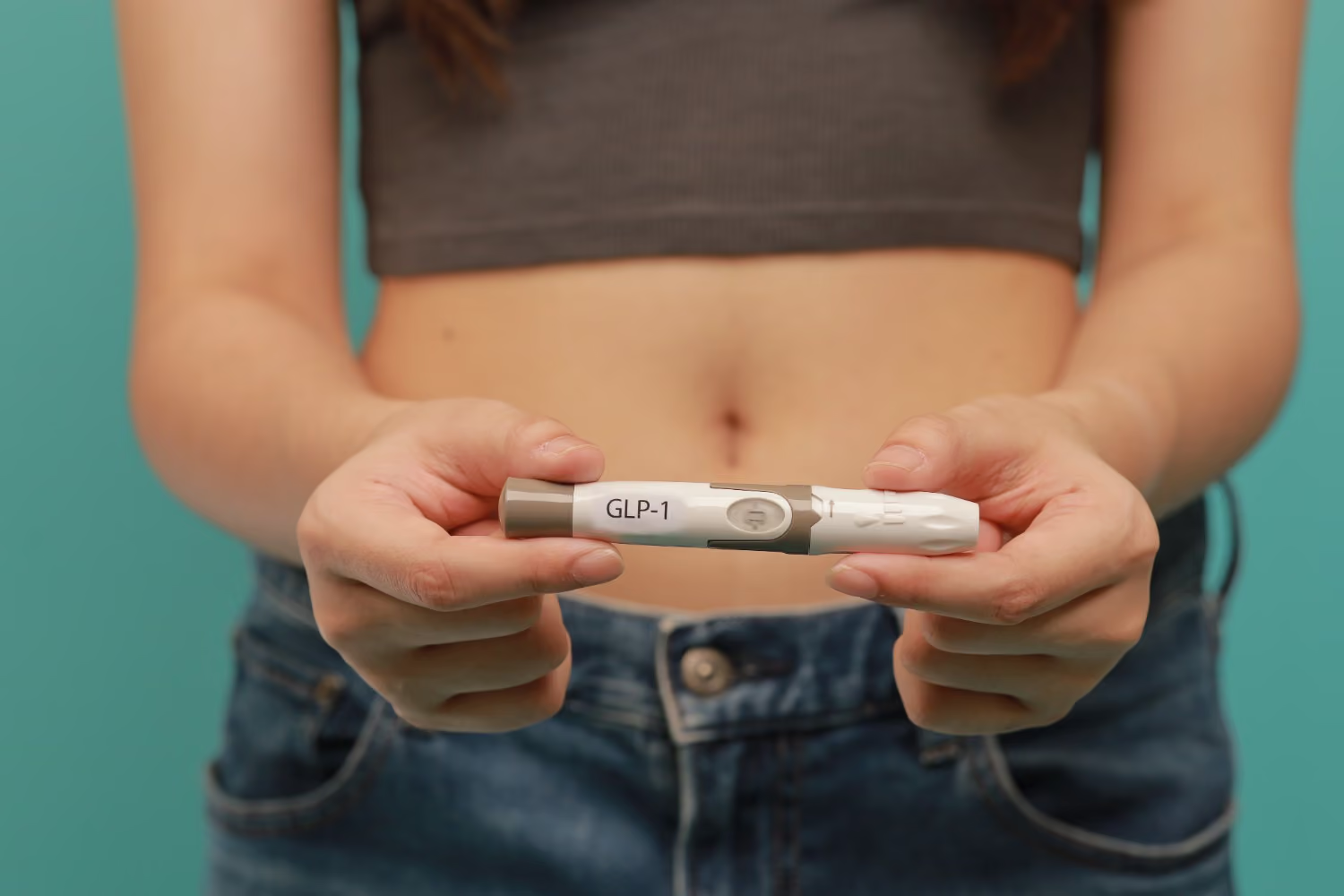
GLP-1-based medications have changed the way many people approach medical weight management. Depending on the specific medication, these treatments can influence appetite, food intake, blood sugar regulation, and other metabolic processes.
Not every GLP-1 medication is approved for weight management, and not every patient is an appropriate candidate. Your provider should determine whether a specific medication is medically appropriate based on your health history and treatment goals.
If you're already taking a GLP-1 medication, bring your current dose and medication information to your appointment.
How Do You Lose Weight Without Losing Too Much Muscle?
Weight loss isn't only about reducing the number on the scale.
Maintaining muscle mass becomes increasingly important as adults get older. A weight-management plan may therefore consider:
- Adequate protein intake
- Resistance training
- Physical activity
- Appropriate rate of weight loss
- Sleep and recovery
- Age-related changes in body composition
Your provider can help determine whether body-composition monitoring is useful as part of your plan.

What Happens at a Weight-Loss Consultation?
Your first appointment is an opportunity to understand what's happening with your weight and metabolic health. Your provider may discuss your weight history, previous diets and weight-loss attempts, eating patterns, physical activity, sleep, medications, family history, existing health conditions, weight-related concerns, and your goals.
Laboratory testing may be recommended when appropriate to evaluate metabolic health or investigate factors that could be affecting your weight.
From there, your provider can discuss potential treatment options.

Weight Loss Is Not Just About a Target Number
A successful weight-management plan may involve goals beyond losing a specific number of pounds.
Depending on your circumstances, meaningful goals might include:
- Improving blood sugar
- Lowering blood pressure
- Improving cholesterol
- Reducing waist circumference
- Increasing physical activity
- Preserving muscle
- Improving sleep
- Making nutrition more sustainable
- Reducing the risk associated with metabolic disease
Your goals should be realistic and medically appropriate for your circumstances.
Patient Testimonials


.svg)
Explore Your Options Weight Loss & Metabolic Health in New Jersey With a Medical Team
Weight Loss & Metabolic Health for Adults in New Jersey
Healthy Aging Medical Centers of New Jersey provides medical weight-management and healthy-aging care for men and women throughout New Jersey.
The practice has locations in:
Whippany
91 S Jefferson Rd Whippany, NJ 07981
Hazlet
155 Middle Rd Hazlet, NJ 07730
Johanan Rand, M.D. and the medical team can evaluate your weight, metabolic health, medical history, and goals to develop an appropriate approach to weight management.
Take a More Complete Approach to Weight Management
Weight loss is rarely just about the number on a scale. Understanding your metabolic health, identifying barriers to weight loss, and choosing realistic treatment strategies can provide a more useful path forward.
Healthy Aging Medical Centers of New Jersey provides weight-loss and metabolic health care in Whippany and Hazlet, serving men and women throughout New Jersey.
Frequently Asked Questions About Weight Loss & Metabolic Health
Weight can change because of factors beyond food intake, including aging, activity level, sleep, medications, hormones, stress, and changes in metabolism. A medical evaluation can help identify factors that may be contributing.
Not necessarily. Weight-management treatment depends on your individual health, metabolic risk factors, body composition, and medical history—not simply whether you consider yourself overweight.
Your provider may look at blood pressure, blood glucose, A1C, cholesterol, triglycerides, waist measurement, family history, and other health factors. Weight is only one part of the picture.
A sustainable weight-management plan doesn't necessarily require an extremely restrictive diet. Your provider can help identify nutrition strategies that fit your health needs, preferences, and lifestyle.
Possibly. GLP-1-based medications may be appropriate for certain patients, but candidacy depends on your health history, current medications, weight-related conditions, and the specific medication being considered.
Adequate protein, resistance exercise, appropriate calorie reduction, and a reasonable rate of weight loss can all matter when preserving lean mass. Your plan can be adjusted based on your age, health, activity level, and body-composition goals.
Not necessarily every patient needs the same testing. Your provider may recommend laboratory work based on your medical history, symptoms, medications, and metabolic risk factors.
Weight regain can happen for many reasons, including changes in appetite, metabolism, habits, medications, and treatment adherence. Long-term weight management often requires ongoing attention rather than treating weight loss as a one-time event.
Possibly, but your provider needs to know everything you're taking. Some weight-management medications can interact with or affect the use of other medications, so your complete medication list should be reviewed before treatment begins.
Healthy Aging Medical Centers of New Jersey has locations at 91 S Jefferson Rd in Whippany and 155 Middle Rd in Hazlet. The medical team can evaluate your weight and metabolic health and discuss treatment options appropriate for your circumstances.
LEARN MORE ABOUT HEALTHY AGING




OUR LOCATIONS
With locations in Whippany, Hazlet, and Miami, we provide personalized medical, wellness, longevity, and aesthetic care designed around your individual health needs.
Healthy Aging + Private Concierge Medicine

